
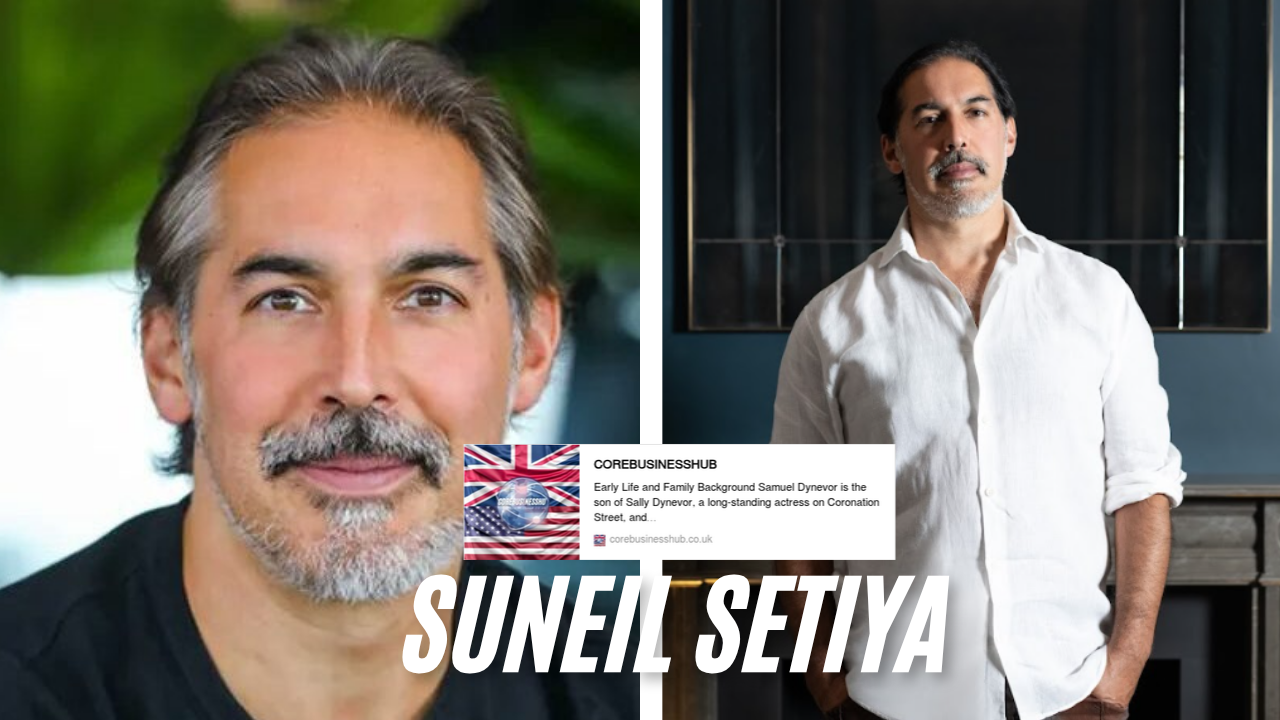
Suneil Setiya is a British financier and entrepreneur whose name is synonymous with precision, discipline, and impact in the world of quantitative trading and philanthropic efforts. Known for co-founding Quadrature Capital, Setiya has built a reputation as a thoughtful, data-driven investor who applies scientific thinking to the financial markets while quietly championing environmental causes.
Early Life and Education
Suneil Setiya grew up in the United Kingdom, where he developed an early curiosity about mathematics and physics. This intellectual foundation shaped his approach to problem-solving, fostering analytical skills that would later become the cornerstone of his career. Setiya pursued higher education in the sciences, studying physics at a prestigious university in the UK, where he honed his ability to understand complex systems and recognize patterns in data. This combination of academic rigor and analytical thinking would set the stage for his success in the financial sector.
Career in Quantitative Finance
Setiya’s career took a decisive turn when he entered the field of quantitative finance. Recognizing the potential of algorithms and data-driven strategies, he co-founded Quadrature Capital, a London-based firm specializing in systematic trading. Unlike traditional investment firms that rely heavily on intuition or public sentiment, Quadrature focuses on empirical data, mathematical models, and automated systems to identify market opportunities.
Under Setiya’s leadership, the firm has grown to be highly respected within the finance industry. Its methods prioritize precision, risk management, and scalability, allowing it to navigate complex markets with consistency. Quadrature Capital remains privately held, reflecting Setiya’s preference for discretion and control over public exposure.
Partnership and Collaboration
A key element of Setiya’s career has been his partnership with fellow financier Greg Skinner. Together, they have combined complementary skills—Setiya’s analytical rigor with Skinner’s strategic vision—to establish one of the most successful quantitative trading firms in London. Beyond business, their collaboration extends into philanthropy, demonstrating a shared commitment to addressing global challenges through both financial and social impact.
Philanthropic Focus
While his achievements in finance are noteworthy, Setiya is equally recognized for his contributions to environmental and social causes. He co-established a philanthropic foundation aimed at tackling climate change and supporting sustainable initiatives. The foundation operates by allocating a portion of trading profits to fund research, innovative solutions, and projects that mitigate climate risks.
Setiya approaches philanthropy with the same analytical mindset he applies to finance, focusing on measurable impact, long-term sustainability, and strategic giving. His work reflects a belief that wealth carries responsibility, and that systemic challenges require structured, evidence-based solutions.
Personal Philosophy and Approach
Despite his professional success, Suneil Setiya maintains a low public profile. He does not seek the spotlight, preferring to let his work in finance and philanthropy speak for itself. This discretion allows him to focus on long-term strategy rather than short-term recognition.
Setiya’s philosophy emphasizes discipline, continuous learning, and measured risk-taking. Whether designing trading algorithms or structuring charitable initiatives, he prioritizes careful analysis and thoughtful execution over impulsive decisions.
Legacy and Influence
Setiya’s influence extends beyond his immediate business success. Through Quadrature Capital, he has helped pioneer systematic trading strategies that are shaping the future of finance. Through his foundation, he is contributing to a growing movement of philanthropists who integrate rigorous analysis into social and environmental impact.
By combining intellectual curiosity with practical application, Setiya embodies a model of modern leadership—one that is strategic, purposeful, and grounded in expertise. His story serves as an example of how professional success and social responsibility can coexist in meaningful ways.
Conclusion
Suneil Setiya is not a figure of headlines or celebrity; rather, he is a quiet architect of innovation and impact. His journey from scientific studies to founding one of London’s leading quantitative trading firms demonstrates the power of analytical thinking in finance. Simultaneously, his dedication to philanthropy shows a commitment to using expertise and resources for the broader good.
Setiya’s life illustrates that influence is not measured by visibility but by the substantial and lasting outcomes one achieves in both professional and humanitarian arenas.