
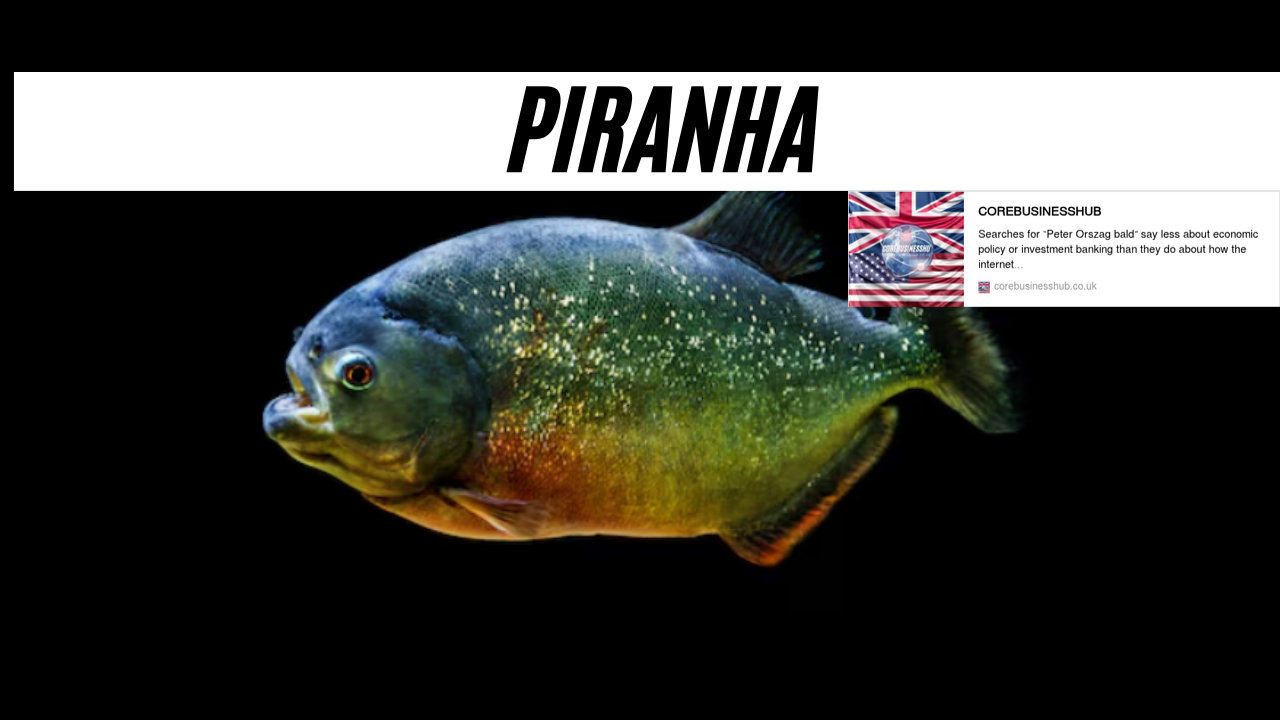
The word “piragnia” is a common misspelling of piranha, a freshwater fish that has become famous worldwide for its sharp teeth and aggressive reputation. Most people first hear about piranhas through movies or viral clips that show dramatic feeding scenes, often creating the impression of a highly dangerous river predator. The reality is more balanced, shaped by biology, environment, and survival behavior rather than constant aggression.
Piranhas belong to a group of fish native to South America, especially the Amazon basin. They are part of a much larger ecosystem where they play an important role in keeping river life balanced. While they do have strong jaws and sharp teeth, their behavior is often misunderstood and exaggerated in popular culture.
What a Piranha Is
A piranha is a freshwater fish found mainly in South American rivers. It belongs to the family Serrasalmidae, which includes several closely related species. These fish are generally small to medium-sized, with a compact body shape and powerful jaws designed for cutting rather than crushing.
One of their most recognizable features is their teeth. Piranhas have a single row of sharp, triangular teeth that fit tightly together. This structure allows them to bite efficiently, especially when feeding on small prey or tearing pieces from food sources in water.
Despite their reputation, piranhas are not a single uniform species. There are multiple types with different feeding habits and behaviors, ranging from more aggressive carnivorous species to those that include plants in their diet.
Natural Habitat and Distribution
Piranhas are native to South America, where they thrive in warm freshwater environments. Their largest populations are found in the Amazon River basin, which provides the ideal conditions for their survival.
They are also found in other river systems such as the Orinoco and Paraguay-Paraná basins. These regions offer slow-moving waters, flooded forests, and seasonal river changes that create rich feeding grounds.
Water levels strongly influence piranha behavior. During the dry season, rivers shrink and fish become concentrated in smaller areas. This can increase competition for food and sometimes lead to more active feeding behavior. During the wet season, they spread out into flooded forests, where food is more widely available.
Physical Features and Adaptation
Piranhas are built for survival in freshwater ecosystems rather than constant aggression. Their bodies are compact and streamlined, allowing quick bursts of movement in water.
Their jaws are one of their most powerful adaptations. The bite force is supported by strong jaw muscles and interlocking teeth that act like scissors. This allows them to tear through flesh, plants, and even tough materials found in rivers.
Color varies depending on species. Some piranhas have silver bodies with red or orange markings, while others appear darker or more uniform in color. These variations help them adapt to different river environments and lighting conditions.
Feeding Habits and Diet
Piranhas are opportunistic feeders, which means they eat whatever food is available rather than relying on a single type of prey. Their diet can include small fish, insects, aquatic plants, fruits, seeds, and occasionally dead animals.
This flexible diet helps them survive in environments where food availability changes throughout the year. While some species are more carnivorous, many are not strictly meat-eaters.
The idea of constant “frenzied attacks” is mostly exaggerated. In real conditions, feeding behavior is often triggered by food scarcity, environmental stress, or competition. Even then, feeding is usually fast and individual rather than coordinated group hunting.
Behavior and Survival Patterns
Piranhas are often seen swimming in groups, which gives the impression of coordinated hunting. In reality, schooling behavior is mainly a defense mechanism. Staying in groups helps reduce the risk of being eaten by larger predators.
When feeding occurs, multiple fish may gather around a food source, but each acts individually. This creates the appearance of a feeding frenzy, but it is not organized group behavior.
Piranhas also rely heavily on environmental cues such as vibration and movement in water. They are more responsive to disturbances than to blood alone, which is another common myth.
Are Piranhas Dangerous to Humans?
The reputation of piranhas as dangerous man-eaters is largely influenced by fiction and media. In reality, attacks on humans are rare.
When incidents do occur, they are usually minor and happen under specific conditions such as low water levels, food scarcity, or accidental disturbance of feeding areas. Piranhas do not actively seek out humans as prey.
Most species prefer small aquatic animals and scavenging over attacking large living targets. Human encounters are typically defensive or accidental rather than predatory.
Myths vs Reality
One of the biggest myths about piranhas is that they can strip large animals to bone within seconds. This image comes mainly from films and exaggerated storytelling rather than scientific observation.
In reality, piranhas do not behave like coordinated killing machines. Their feeding is influenced by survival needs, environmental pressure, and competition for food.
Another common myth is that blood alone triggers attacks. While piranhas can detect changes in water, movement and vibration are far more important triggers than smell alone.
Piranhas in Ecosystems and Aquariums
Piranhas play an important ecological role in river systems. They help maintain balance by feeding on weak or dead animals and controlling smaller fish populations.
In some regions, certain piranha species are also kept in aquariums. However, they require specific care, controlled environments, and proper feeding routines. In many places, ownership is restricted due to safety and environmental concerns.
Their popularity in aquariums is often driven by their reputation rather than their actual behavior, which is generally more cautious than aggressive.
Conclusion
Piranhas are one of the most misunderstood fish in the natural world. While they have sharp teeth and a strong bite, their behavior is shaped by environment, food availability, and survival needs rather than constant aggression.
They are not the mindless predators often shown in movies, but adaptable freshwater fish playing a role in South American river ecosystems. Understanding them in context helps separate fact from fiction and replaces fear with a more accurate view of nature.
Frequently Asked Questions
What is a piranha?
A piranha is a freshwater fish native to South America, known for its sharp teeth and strong bite.
Where do piranhas live?
They are mainly found in the Amazon, Orinoco, and Paraguay river systems.
What do piranhas eat?
They eat fish, insects, plants, fruits, and sometimes dead animals depending on availability.
Are piranhas dangerous to humans?
They eat fish, insects, plants, fruits, and sometimes dead animals depending on availability.
Are piranhas dangerous to humans?
They are not actively dangerous to humans, and attacks are rare and usually minor.
Why do piranhas have sharp teeth?
Their teeth are adapted for cutting food efficiently in water environments.
Do piranhas hunt in groups?
They may gather in groups for protection and feeding, but they do not coordinate attacks.
Why are piranhas famous?
Their reputation comes mainly from movies and exaggerated stories rather than real behavior.