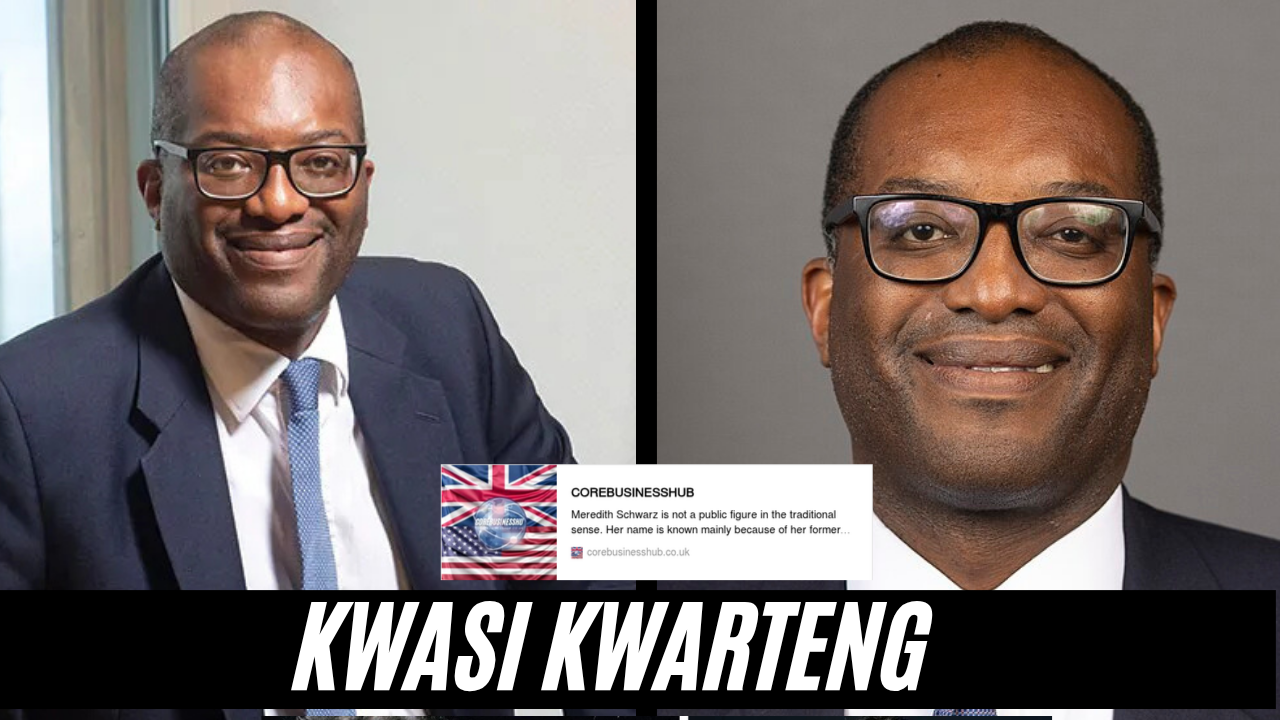
Kwasi Kwarteng is a British politician best known for his short but highly consequential role as Chancellor of the Exchequer in 2022. His time at the Treasury lasted only weeks, yet it became one of the most talked-about episodes in modern UK economic politics. Before that moment, he built a long parliamentary career, held senior cabinet positions, and developed a reputation as a strong free-market thinker within the Conservative Party.
Born on 26 May 1975 in London, Kwarteng’s journey reflects elite education, academic research, financial work, and a steady climb through British politics. His story is often discussed not only for his rise, but also for the economic fallout linked to his brief time as Chancellor.
Early Life and Family Background
Kwasi Kwarteng was born in Waltham Forest, East London, to Ghanaian parents who had moved to the UK in the 1960s. His upbringing was shaped by a strong focus on education, discipline, and academic achievement.
From a young age, he showed strong academic ability and performed well in competitive school environments. He later attended Eton College, one of Britain’s most prestigious schools, after winning a scholarship. This early step placed him among a small group of students entering elite academic and political pipelines.
Education and Academic Path
After Eton, Kwarteng studied at Trinity College, Cambridge, where he read classics and history. His academic interests leaned heavily toward historical systems, governance, and economic structures.
He later became a Kennedy Scholar at Harvard University, which broadened his academic exposure internationally. Returning to Cambridge, he completed a PhD in economic history, focusing on long-term patterns in financial systems and state economies.
This academic background later influenced his political thinking, especially his belief in market-driven economic policy and limited state intervention.
Early Career Before Politics
Before entering Parliament, Kwarteng worked in the financial sector as an analyst. This experience gave him practical exposure to markets and investment behavior.
He also worked as a journalist and columnist, writing for major UK publications. His writing often focused on politics, economics, and historical analysis, building his profile as a public intellectual.
During this time, he co-authored books on British political and economic systems, which helped establish his reputation within Conservative policy circles.
Entry Into Parliament
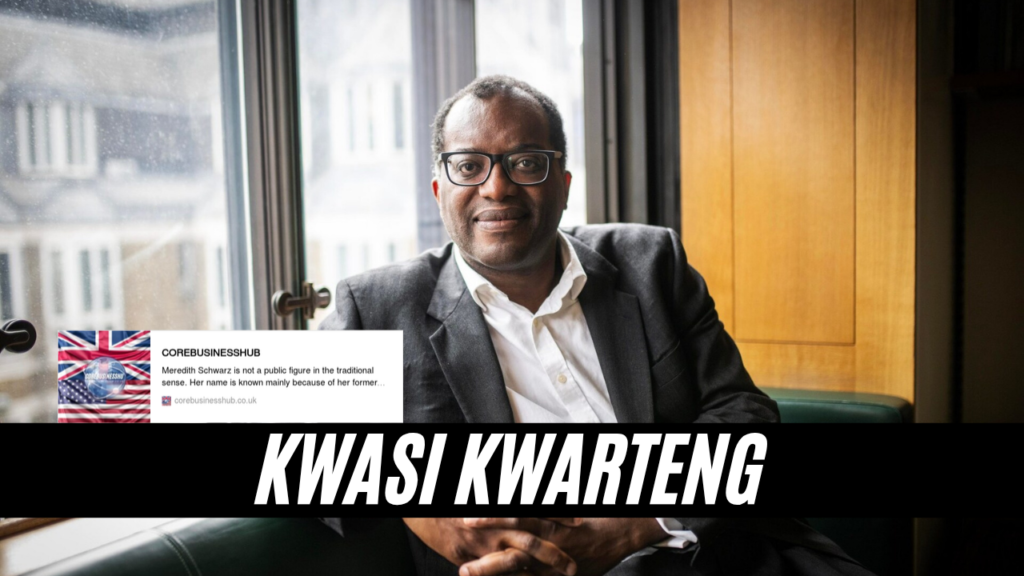
Kwarteng entered UK politics in 2010, when he was elected as the Member of Parliament for Spelthorne in Surrey.
In his early years in Parliament, he worked on committees such as transport and public accounts. These roles focused on reviewing government spending and evaluating policy decisions.
From the beginning, he aligned himself with the Conservative Party’s economically liberal wing, supporting lower taxes and reduced government intervention in markets.
Rise Through Government Roles
His political career advanced steadily under Conservative governments.
He served in junior ministerial positions before gaining more responsibility during the Brexit period. He became involved in government departments linked to EU withdrawal, trade adjustments, and regulatory changes.
Later, under Boris Johnson’s leadership, he was appointed Minister of State for Business, Energy and Clean Growth, and then promoted to Secretary of State for Business, Energy and Industrial Strategy (2021–2022).
In this role, he dealt with major national issues including energy policy, business recovery after COVID-19, and industrial strategy planning.
Appointment as Chancellor of the Exchequer
Kwasi Kwarteng became Chancellor of the Exchequer in September 2022 under Prime Minister Liz Truss.
His appointment placed him at the center of UK economic policy during a difficult period marked by inflation, rising energy costs, and global economic uncertainty.
As Chancellor, he was responsible for shaping taxation, spending policy, and overall fiscal strategy for the UK government.
The 2022 Mini-Budget and Economic Reaction
Shortly after taking office, Kwarteng delivered a major fiscal statement known as the mini-budget or “Growth Plan.”
The package included large tax cuts and major changes to economic policy, including:
- Reduction of income tax rates
- Removal of the additional top tax band
- Cancellation of planned corporation tax increases
- Cuts to national insurance contributions
The goal was to stimulate economic growth by increasing private investment and consumer spending.
However, the announcement caused immediate concern in financial markets. Investors reacted strongly due to the scale of borrowing implied and the lack of a full forecast from the Office for Budget Responsibility at the time of the announcement.
Market Instability and Policy Reversal
Following the mini-budget, financial markets reacted sharply. The pound fell to record lows against the US dollar, and UK government bond yields rose significantly.
Pension funds came under pressure, and the Bank of England intervened to stabilize financial markets. The situation created widespread uncertainty about the government’s fiscal direction.
As pressure increased, parts of the mini-budget were reversed. The government began rolling back key measures in an attempt to restore market confidence.
Removal as Chancellor
On 14 October 2022, Kwasi Kwarteng was removed from his position as Chancellor by Prime Minister Liz Truss.
His dismissal came just 38 days after taking office, making his tenure one of the shortest in UK history. He was replaced by Jeremy Hunt, who quickly reversed most of the mini-budget policies.
The decision marked a major turning point for the Truss government, which lost political and economic credibility shortly afterward.
Return to Parliament and Exit from Politics
After leaving the Treasury, Kwarteng returned to the backbenches as MP for Spelthorne.
He maintained a lower political profile following his dismissal and did not return to senior government office. In 2024, he stepped down from Parliament ahead of the general election, ending his time as an MP.
His departure closed a 14-year parliamentary career that included multiple ministerial positions.
Personal Life
Kwasi Kwarteng is known for keeping his personal life private. He is married and has a child. Outside politics, he has maintained an interest in history, writing, and economic theory.
Unlike many public figures, he rarely shares details of his private life publicly, focusing instead on policy and academic work.
Legacy and Political Impact
Kwarteng’s legacy is closely tied to his time as Chancellor. Supporters argue that his approach represented a bold attempt to reshape the UK economy through tax cuts and growth-focused policy.
Critics, however, view the mini-budget as a major economic misstep that triggered instability in financial markets and forced emergency intervention from the Bank of England.
His case is often discussed in debates about fiscal responsibility, market confidence, and the risks of rapid economic policy change.
Despite the controversy, his career reflects a significant period in modern UK politics, especially during Brexit transition years and post-pandemic economic recovery.
Frequently Asked Questions
Who is Kwasi Kwarteng?
Kwasi Kwarteng is a British politician who served as Chancellor of the Exchequer in 2022.
Why is Kwasi Kwarteng famous?
He is best known for the 2022 mini-budget and its impact on UK financial markets.
How long was he Chancellor?
He served as Chancellor for 38 days in 2022.
What happened after the mini-budget?
The policy was partially reversed, and he was removed as Chancellor.
When did he leave politics?
He stepped down as an MP in 2024.
Conclusion
Kwasi Kwarteng’s political career is defined by both steady rise and sudden disruption. From academic success and long parliamentary service to a brief and controversial time as Chancellor, his journey reflects the volatility of modern British politics.
His time in office remains a key reference point in discussions about economic policy and government decision-making. Whether viewed as a bold reformer or a cautionary example, his impact on UK political history is firmly established.