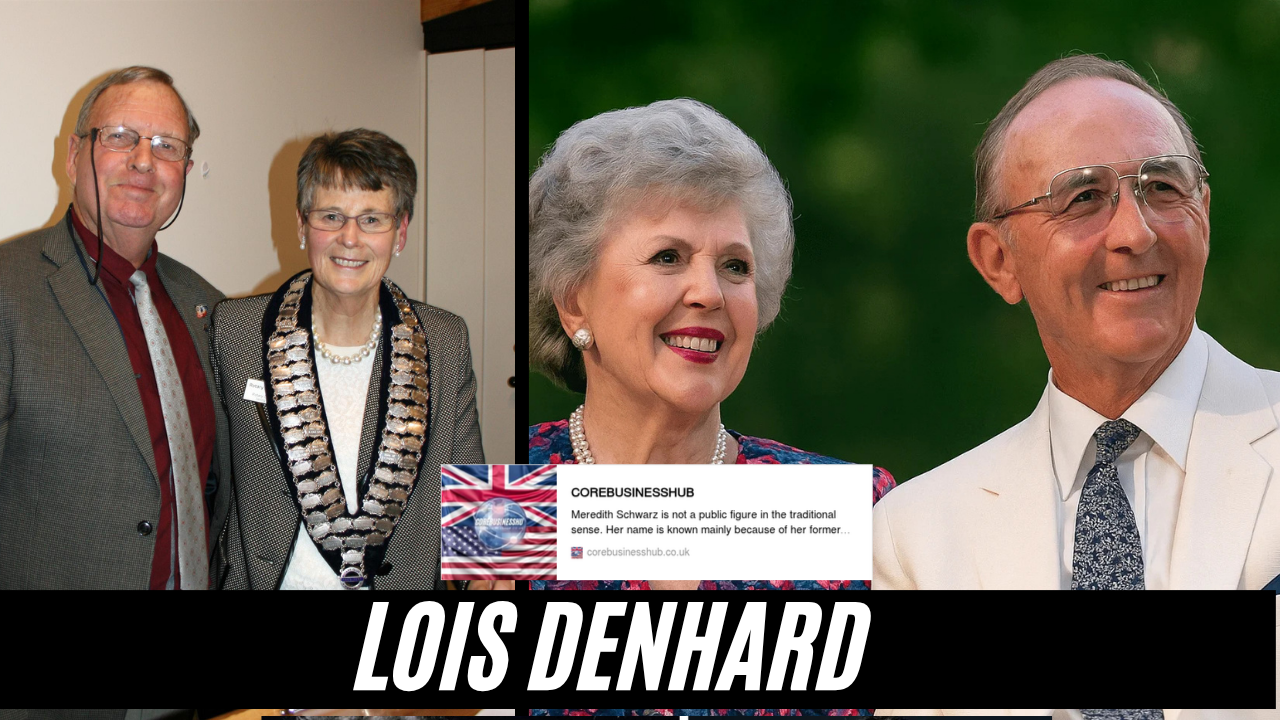
Lois Denhard is known publicly as the wife of former Major League Baseball pitcher and longtime Atlanta Braves broadcaster Ernie Johnson Sr., and the mother of Ernie Johnson Jr., one of the most respected sports broadcasters in the United States. Her life is not documented through a personal career or public achievements, but through her family’s long-standing presence in American baseball and sports media.
Her story fits a specific kind of sports biography that rarely gets detailed attention. It is the story of someone who stayed outside the spotlight while helping sustain a household deeply connected to professional athletics and broadcasting over several decades.
Marriage to Ernie Johnson Sr. in 1947
Lois Denhard married Ernie Johnson Sr. in 1947, a period when professional baseball life was very different from today. Players traveled constantly, salaries were modest compared to modern standards, and family stability often depended on flexibility and resilience.
Ernie Johnson Sr. was still early in his professional baseball journey at that time. Their marriage began during a transitional phase in his life, moving between military service and a developing baseball career. That timing meant Lois entered married life during uncertainty rather than stability, something that shaped the early years of their relationship.
The marriage lasted for more than six decades, continuing until Ernie Johnson Sr.’s passing in 2011.
Life in a Baseball Household
Life as the wife of a professional baseball player in the mid-20th century came with constant change. Seasons were long, travel schedules were demanding, and families often moved between cities depending on contracts and team assignments.
Lois Denhard’s role was centered on maintaining continuity at home. While her husband focused on pitching and later broadcasting, she managed the household structure that allowed the family to function through frequent transitions.
This type of support role is often overlooked in sports history, but it is essential in understanding how professional athletes and broadcasters were able to sustain long careers during that era.
Family Life and Children
Lois Denhard and Ernie Johnson Sr. had three children: Ernie Johnson Jr., Chris Johnson, and Dawn Johnson.
Among them, Ernie Johnson Jr. became the most publicly recognized, building a long career in sports broadcasting, most notably with TNT’s Inside the NBA. His public reputation for professionalism, empathy, and composure is often traced back to his upbringing.
Family accounts and interviews suggest that Lois played a central role in maintaining emotional and structural stability in the home. While her husband was frequently traveling for baseball and broadcasting work, she ensured the children had consistency in daily life.
This balance between a public sports career and a stable home environment became a defining feature of the Johnson family story.
Influence on Ernie Johnson Jr.
One of the most visible parts of Lois Denhard’s legacy appears through her son Ernie Johnson Jr.’s career. He has often spoken about the influence of both parents, especially in shaping his values and communication style.
Ernie Jr.’s approach to broadcasting—measured, respectful, and emotionally aware—is often linked to his upbringing. While his father introduced him to baseball culture and media environments, his mother provided the steady foundation that kept family life grounded.
In many sports families, one parent is visible in public and the other remains in the background. Lois represents the latter, but her influence is present in how her children carried themselves professionally.
Life After Baseball and Broadcasting Years
As Ernie Johnson Sr.’s career shifted from MLB pitching to broadcasting with the Atlanta Braves, the family remained connected to the sports world for decades.
Broadcasting brought more stability than playing, but it still required travel, preparation, and long seasonal commitments. Through this period, Lois continued her role at home, supporting a family that was now tied not just to baseball, but to media and public sports coverage.
When Ernie Johnson Sr. passed away in 2011, the family had already become part of a broader sports broadcasting legacy.
Private Life and Public Absence
Unlike many spouses of professional athletes, Lois Denhard never built a public-facing career. There are no widely known records of her working in media, sports organizations, or public institutions.
Her presence in public information is almost entirely tied to family references. This makes her biography unusual in modern terms, where many connected figures often have independent public profiles.
Instead, her life is understood through the lens of family history rather than individual public activity.
Role in a Sports Legacy Family
The Johnson family is widely respected in American sports media, especially because of Ernie Johnson Jr.’s long career and reputation in broadcasting.
Behind that visibility, Lois Denhard’s role was foundational. She maintained the household environment that allowed her family to stay grounded through decades of change in professional sports culture.
This kind of contribution does not show up in statistics or public records, but it often defines the stability of families connected to high-pressure careers like professional baseball and television broadcasting.
Legacy Through Family Impact
Lois Denhard’s legacy is not defined by public recognition, but by influence carried forward through her children. Her son’s career in sports broadcasting reflects values often associated with strong family upbringing—discipline, balance, and communication.
While her name is not associated with media appearances or professional achievements, it is linked to one of the more respected families in sports broadcasting history.
In that sense, her impact is indirect but lasting.
Conclusion
Lois Denhard represents a generation of spouses whose contributions to sports and media careers happened away from cameras and public attention. Her life was centered on family stability during decades when professional baseball and broadcasting demanded constant movement and adjustment.
Through her marriage to Ernie Johnson Sr. and her role as mother to Ernie Johnson Jr., she became part of a broader sports legacy that continues to influence American broadcasting today.
Her story is not defined by visibility, but by presence—the kind that shapes careers without ever stepping into the spotlight.