
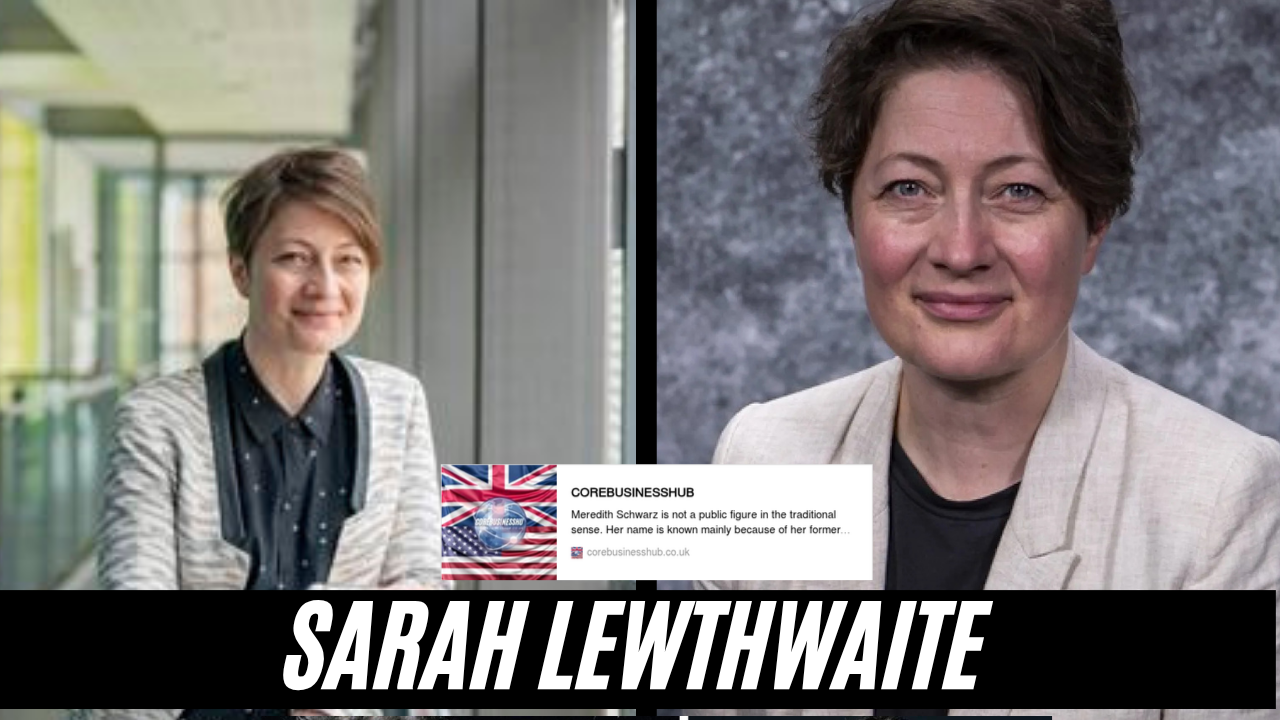
Sarah Lewthwaite is a British academic whose work focuses on how digital systems and education can be made more accessible for everyone. Her research sits at the intersection of education, technology, and disability studies, where she examines how learning environments can better support disabled learners and ensure equal participation in the digital world.
Her work has become increasingly relevant as universities, workplaces, and public services move toward digital-first systems. In these environments, accessibility is no longer optional. It is a requirement that shapes how people learn, work, and interact with information.
Academic background and professional role
Sarah Lewthwaite is a UK-based academic researcher working in higher education. She is associated with the University of Southampton, where she contributes to research on education, inclusion, and digital accessibility.
Her academic role involves both research and leadership in projects that explore how accessibility can be integrated into teaching and learning systems. Instead of treating accessibility as a separate topic, her work focuses on embedding it into mainstream education practices.
This approach is important because accessibility often becomes an afterthought in digital design. Her research challenges that pattern by focusing on early-stage inclusion in education and professional training.
Focus on digital accessibility in education
At the core of Lewthwaite’s work is a simple question: how do people learn to make digital systems accessible?
Digital accessibility refers to designing websites, tools, and learning platforms that can be used by people with disabilities, including visual, hearing, cognitive, and mobility impairments. While many countries have guidelines and legal frameworks, practical training in accessibility is often inconsistent.
Her research investigates this gap between policy and practice. She looks at how students, educators, and professionals understand accessibility and how that knowledge can be improved through better teaching methods.
One of her key contributions is shifting attention away from only technical solutions and toward education itself. In her view, accessibility is not just about tools or software features but about how people are trained to think.
Role in higher education research
Lewthwaite’s work is strongly connected to higher education systems. Universities play a key role in preparing future designers, developers, educators, and researchers. If accessibility is not part of that training, it is often missing in real-world systems later.
Her research explores how universities can better integrate accessibility into courses, especially in subjects like computer science, education, and digital media. She also examines how teachers themselves can be supported in delivering accessibility content effectively.
This includes understanding barriers such as limited training resources, lack of awareness, and unclear responsibility within academic departments. Her work highlights that accessibility education must be structured and consistent if it is to have real impact.
UKRI-funded research on accessibility skills
A significant part of her work involves research funded through UKRI (UK Research and Innovation), where she leads projects focused on accessibility education and digital skills.
One of her major research directions is exploring how accessibility skills are taught across different fields. This includes universities, professional training programs, and workplace learning environments.
The goal is not just to teach accessibility concepts, but to ensure they are applied in real design and development work. This means helping learners move from theory to practical implementation.
Her research also explores how accessibility education can be scaled, so it is not limited to specialist courses but becomes part of general digital literacy.
Disability studies and inclusive thinking
Lewthwaite’s work is also closely linked to disability studies, a field that examines how society structures inclusion and exclusion for disabled people.
Rather than focusing only on medical or technical definitions of disability, her research looks at social and educational systems. She studies how barriers are created not just by physical or digital environments, but also by lack of knowledge and training.
This perspective is important because it reframes accessibility as a shared responsibility. Instead of being handled only by specialists, it becomes part of everyday professional practice.
Her work encourages institutions to think about inclusion from the beginning of design processes, not as a fix added at the end.
Academic publications and contributions
Sarah Lewthwaite has contributed to academic research through journal articles, conference papers, and collaborative projects. Her work often appears in fields related to education research, accessibility studies, and digital learning.
A consistent theme across her publications is the idea that accessibility should be taught as a core skill. This applies not only to students but also to educators and professionals who design digital systems.
Her research is also methodologically focused, meaning she studies not only what is taught but how research and teaching practices themselves are structured. This adds depth to her work in education systems.
Research impact and real-world relevance
The importance of Lewthwaite’s research lies in its practical impact. As more services move online, accessibility becomes essential for equal participation in education, employment, and daily life.
Her work helps institutions understand that accessibility is not only a compliance issue but a skill that must be developed over time. This includes training educators, updating curricula, and improving institutional awareness.
The broader impact of her research is visible in ongoing discussions about digital inclusion in higher education and professional training systems across the UK.
Public presence and academic focus
Unlike public media figures, Sarah Lewthwaite maintains a primarily academic profile. Most of her work is shared through universities, research publications, and academic collaborations.
This reflects the nature of her field, which is focused on long-term institutional change rather than public visibility. Her influence is seen more in educational systems and research communities than in mainstream media.
Why her work matters today
Digital accessibility is becoming increasingly important as more aspects of life move online. From education platforms to job applications and government services, digital systems now shape access to opportunities.
Lewthwaite’s research addresses a critical gap: many professionals are not formally trained in accessibility, even when they work in digital fields. Her work shows that solving this requires changes in education, not just technology.
By focusing on how accessibility is taught, her research supports a future where inclusion is built into digital systems from the beginning rather than added later.
Frequently Asked Questions
Who is Sarah Lewthwaite?
Sarah Lewthwaite is a UK academic researcher focused on digital accessibility, disability studies, and inclusive education.
What does Sarah Lewthwaite research?
She studies how accessibility is taught in universities and workplaces and how digital inclusion can be improved through education.
Where does she work?
She is associated with the University of Southampton, where she works on education and accessibility research projects.
Why is digital accessibility important in her work?
Because it ensures that digital systems can be used by everyone, including disabled users, in education and professional environments.
What is her main research goal?
Her goal is to improve how accessibility is taught and integrated into digital skills training and higher education.
Is her work practical or theoretical?
It is both, but strongly focused on practical application in education systems and professional training.
Why is she relevant today?
Because digital systems are now central to education and work, making accessibility a key requirement for equal participation.
Conclusion
Sarah Lewthwaite’s research highlights an important shift in how we think about digital accessibility. It is not just about fixing websites or meeting technical standards. It is about how people are trained to design and use digital systems in the first place.
Her work shows that education plays a central role in building inclusive technology. Without proper training, accessibility remains inconsistent and dependent on individual awareness rather than system-wide practice.
As digital environments continue to expand, her research remains relevant for universities, workplaces, and policymakers trying to build more inclusive systems. The challenge she focuses on is simple but significant: making accessibility a standard part of how digital skills are learned, not an optional extra.